![[Gossip Board] Weber: West Ham’s Goal Was Disallowed Correctly. It Was Clear At The Beginning Of The Season That Pulling The Goalkeeper’s Arm Was A Foul.](https://wcscore2026.com/wp-content/uploads/2026/05/1778989140193_0.webp)
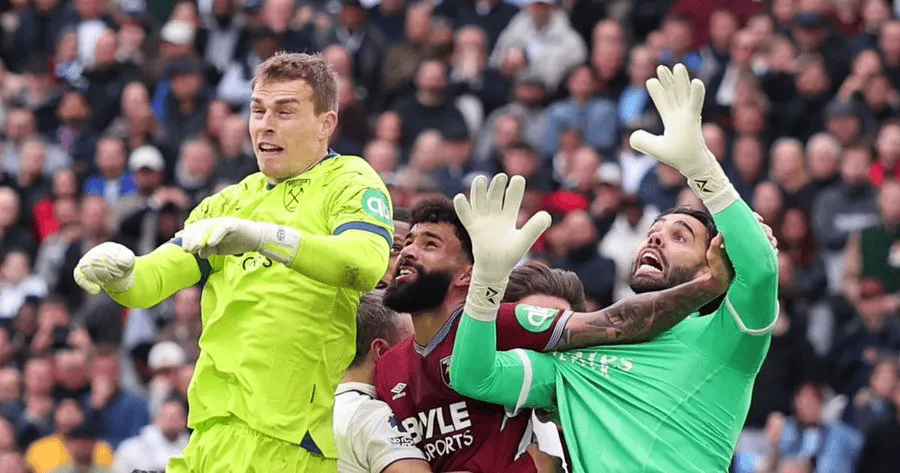
On May 13th, there was news that former Premier League referee Howard Webber claimed in an interview that Chris Kavanagh and VAR made the correct decision and ruled that the goal scored at the last minute of the game between West Ham United and Arsenal was invalid.
Trossard gave Mikel Arteta's side the lead in the 83rd minute and West Ham felt they had got a point in stoppage time at the London Stadium when Wilson volleyed the ball into the net after it bounced to his feet in the penalty area. However, a lengthy VAR check disallowed the goal because Pablo had fouled David Raya in the process.
As the ball flew into the Arsenal penalty area, Raya rushed out to receive the ball. When he failed to fully touch the ball, Pablo appeared to grab the goalkeeper's left arm, causing him to fall to the ground. The Arsenal team was very angry. Kavanagh, who did not call a foul at first, changed his mind after checking the replay on the side monitor. Kavanagh conveyed his verdict to the audience in the stadium: "After review, West Ham United player No. 19 fouled the goalkeeper. The final penalty was a free kick.".
At the moment, Webb, who is the chief referee of the Professional Match Referees Limited (PGMOL), gave his own opinion on the penalty. He felt that Kavanagh and VAR made the correct penalty.
The 54-year-old Weber declared on the show, "So, is this a foul on the goalkeeper? There is no doubt that it is. We have said all season, including in the briefing meetings with the players before the season, that if the goalkeeper is hindered by the opponent's grabbing or holding the arm, so that he cannot perform the save, it will be judged as a foul. So, when you see the picture from the best angle, you will find that Pablo did this. It is clear and unambiguous on the video, and it happened very early."
Even for the referee, it is difficult to see clearly due to the large group of players in the penalty area, so this is not a clear and obvious foul, but when VAR sees this situation, they must intervene of course. We are in the Premier League and we know that not every contact is a foul. We are constantly communicating with clubs, supporters groups and other stakeholders about the types of games they expect to see and how they expect us to officiate.
This season, the number of contacts in the penalty area is more unique than in previous seasons, which really creates a challenge for referees. However, when they try to determine what should be punished, they are looking for impactful actions. In this case, you'll see that it took a while because they went through the process very thoughtfully because they had a high level of respect for the game and, of course, they understood the significance and the critical value of the situation.
Source: football.london